Big fruit. Deep roots. 110 years of pawpaw history.
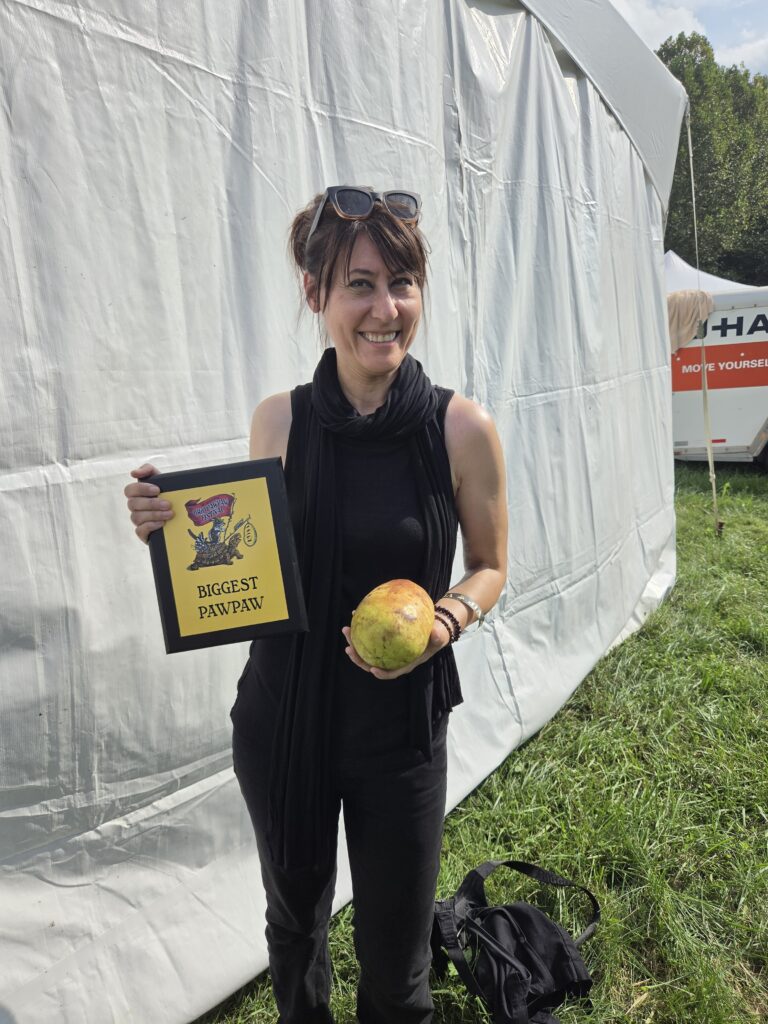
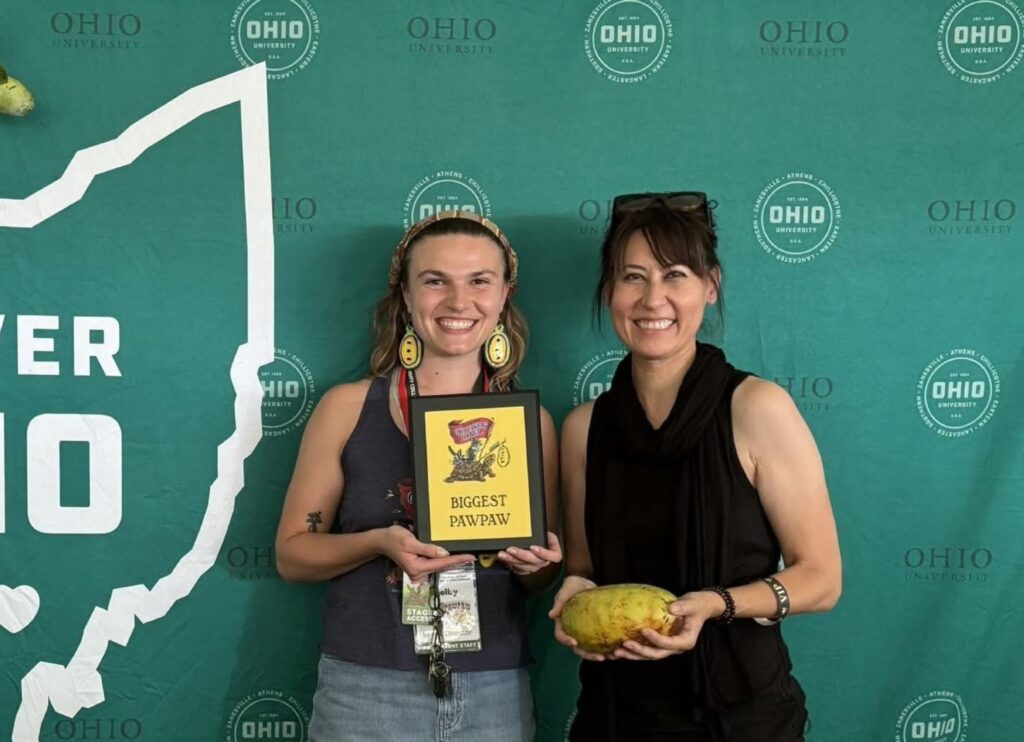
I’m incredibly excited to share that Libbey Farm took First Place for Biggest Pawpaw at the 2026 Ohio Pawpaw Festival with a Susquehanna pawpaw weighing an official 965 grams!
But the more I learned about the history behind this particular cultivar, the more meaningful the win became.
The story of this pawpaw stretches from a national fruit contest held in 1916, through the breeding work of legendary pawpaw grower Neal Peterson, all the way to a six-year-old tree growing on our family farm in Fayette County, Ohio.
110 years later, an extraordinary Ohio pawpaw was a winner once again.
It Started With a Very Big Pawpaw
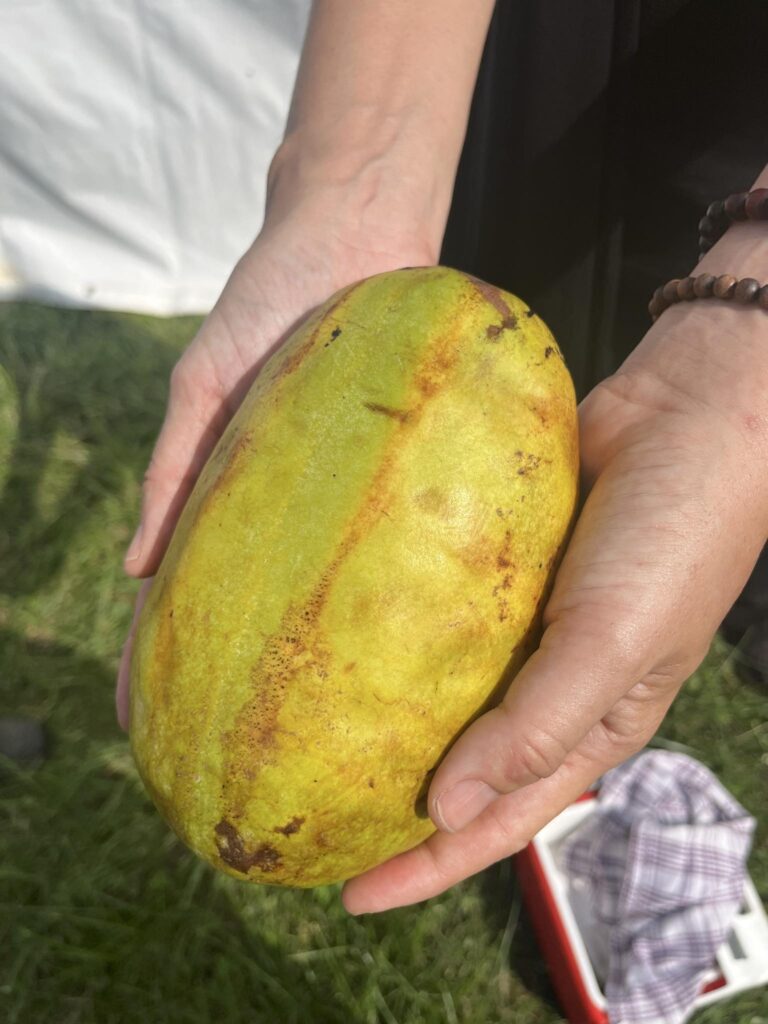
I harvested this Susquehanna on Sunday, September 13, 2026, and knew immediately that I had something unusual.
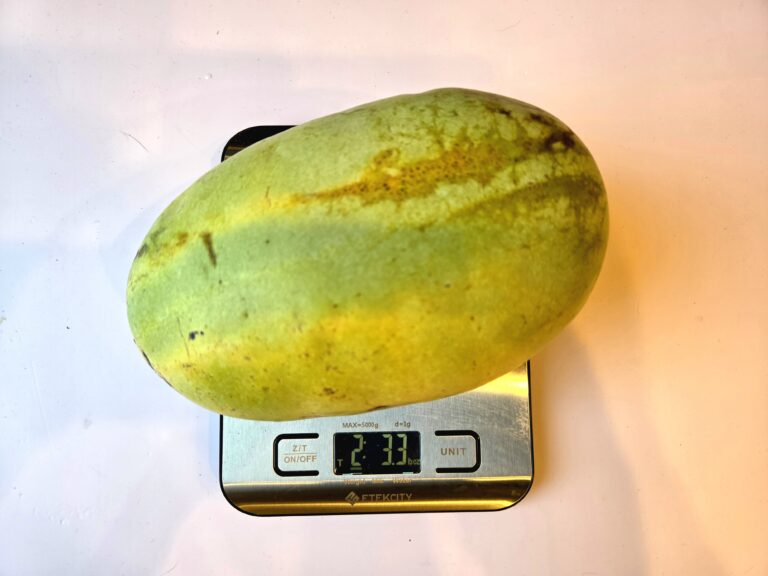
When it went onto my scale at home, the number stopped at: 2 pounds, 3.3 ounces or 1,002 grams.
More than a kilogram. One pawpaw.
What makes that size even more exciting to me is the tree that produced it.
This is a Susquehanna, one of the cultivars selected and introduced by renowned pawpaw breeder Neal Peterson. I planted this particular tree on June 14, 2020, which means it produced this remarkable fruit at only about six years old.
And those six years haven’t all been easy ones.
A Big Fruit After Two Difficult Years
Two years of severe drought conditions in Fayette County had put our trees through a tremendous amount of stress. The 2026 season finally brought some relief, and this fruit felt like a particularly fitting symbol of just how resilient pawpaw trees can be.
The Official Weigh-In
I entered the fruit in the Biggest Pawpaw competition at the 2026 Ohio Pawpaw Festival.
Its official festival weight was: 965 grams
Watch the winning Susquehanna at the 2026 Ohio Pawpaw Festival. Video footage courtesy of Austin Cliffe.
A Pawpaw Story 110 Years in the Making
In 1916, a national contest was held to identify exceptional pawpaws from across the country.
The winning fruit came from Lawrence County, Ohio, submitted by Estella Ketter, identified in the original 1917 Journal of Heredity account as “Mrs. Frank Ketter” of Ironton, Ohio.
That fruit didn’t disappear into pawpaw history.
Its genetics lived on.
Decades later, Neal Peterson undertook his extraordinary work evaluating and selecting pawpaws with the goal of developing superior named cultivars. Among the cultivars that emerged from his work was Susquehanna.
And Susquehanna traces its lineage back to Estella Ketter’s 1916 contest-winning fruit.
Want to read the original story?
Read the 1917 Journal of Heredityarticle, “The Best Papaws,” which documents the contest results and Mrs. Ketter’s winning Ohio pawpaw.
A Message From Rodney Dever
That connection became even more meaningful when I received a wonderful message from Rodney Dever, Neal Peterson’s longtime business partner.
Rodney has been actively researching Estella Ketter and the history of the 1916 contest.
After seeing the winning fruit, he shared how happy he was that it was a Susquehanna and reflected on how proud Estella Ketter might have been to know that a descendant of her winning pawpaw had earned another first-place honor.
As growers, it’s easy to focus on what’s happening right now: this year’s harvest, this year’s weather, this year’s fruit.
But named cultivars connect us to the growers who came before us.
The tree growing in my orchard today represents generations of observation, selection, preservation and breeding.
And in this case, that story reaches back at least 110 years.
Learn More: The Search for Estella Ketter and Her Historic Pawpaw
Rodney Dever explores the fascinating history of Estella Ketter, the 1916 pawpaw contest and the genetic legacy that continues through pawpaws today in this presentation from Kentucky State University’s International Pawpaw Conference.
But What's Inside a 965-Gram Pawpaw?
I let the fruit continue to ripen after the festival before finally cutting it open on Sunday, September 27.
Then I separated and weighed the pulp, skin, and seeds.
The results: 77% pulp 20% skin 3% seed by weight 14 seeds total
And from this single fruit, I collected nearly 2½ cups of pawpaw pulp.
That 3% seed-to-fruit ratio particularly stands out. One of the qualities prized in improved pawpaw cultivars is a high proportion of edible pulp relative to seed – and this fruit certainly delivered.
And How Did It Taste?
There was one final test.
Flavor.
I intentionally allowed the fruit to become very ripe before processing it.
That’s because one of my favorite flavors in a pawpaw tends to emerge as certain fruit become extremely ripe:
Butterscotch.
And this Susquehanna delivered.
The pulp had developed a delicious, rich butterscotch note – the exact flavor I had been hoping for.
It’s also a good reminder of why describing pawpaw simply as tasting like “banana and mango” doesn’t really do this fruit justice.
Cultivar, growing conditions, and stage of ripeness can all influence the eating experience.
Pawpaws can reveal flavors and aromas that are surprisingly complex.
For me, that deep butterscotch flavor was the perfect ending to this particular fruit’s story.